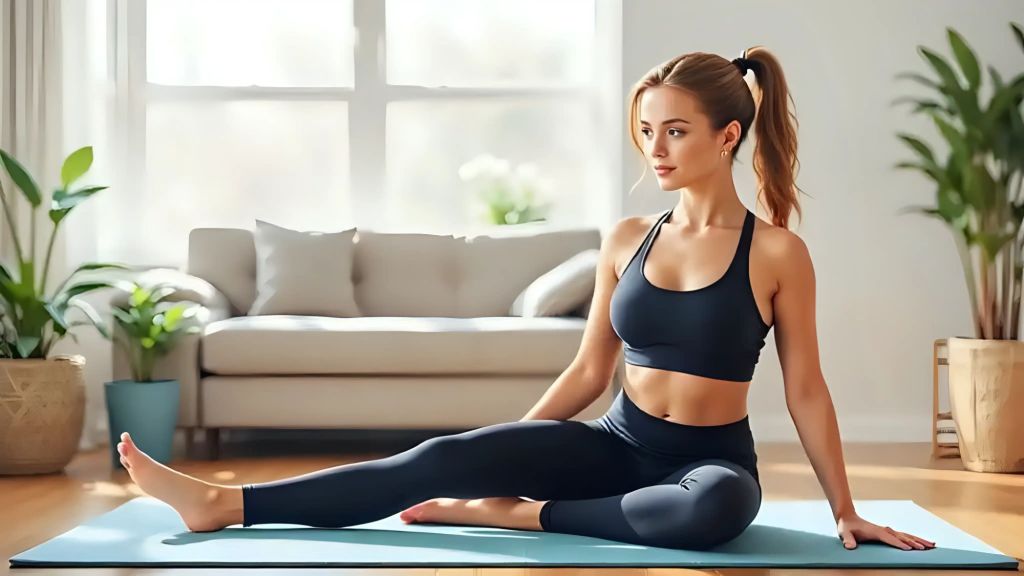
Regular physical activity is essential for maintaining a healthy lifestyle. This essay discusses five simple yet effective at-home exercises that can enhance physical fitness. These exercises are accessible to individuals regardless of their fitness levels. They can be easily integrated into daily routines, contributing to improved health and wellness.
The importance of physical exercise is well documented. According to the World Health Organization, insufficient physical activity is a leading risk factor for global mortality. Historically, the relationship between exercise and health has been explored since ancient civilizations, where physical prowess was celebrated. In contemporary society, individuals increasingly seek efficient ways to incorporate physical activity into their lives, particularly in the wake of the COVID-19 pandemic, which limited access to gyms and fitness centers.
The following sections will detail five home exercises: bodyweight squats, push-ups, planks, lunges, and jumping jacks. Each exercise will be analyzed based on its physical benefits, execution, and integration into a home routine.
Bodyweight squats are a fundamental exercise that strengthens the lower body, particularly the quadriceps, hamstrings, and glutes. They also engage the core muscles, promoting stability. To perform a squat, an individual stands with feet shoulder-width apart and bends at the knees while keeping the back straight. The depth of the squat can vary based on comfort and fitness levels. Not only do bodyweight squats enhance muscular endurance, but they also help improve flexibility in the hips, knees, and ankles. They require no equipment and can be performed in any space within the home.
Push-ups are a classic upper body exercise that strengthens the chest, shoulders, triceps, and core. They can be modified to suit different fitness levels. A standard push-up involves placing the hands on the floor, shoulder-width apart, while maintaining a straight line from head to heels. Beginners may opt for knee push-ups, while advanced exercisers can elevate their feet or perform one-handed variations. The versatility of push-ups makes them an excellent choice for home workouts. Additionally, they can be structured into circuits to enhance cardiovascular health by increasing heart rate during grouped sets.
Planks are an essential core exercise that builds stability and strength in the abdominal and lower back muscles. To execute a plank, the individual lies face down and lifts the body on the forearms and toes, maintaining a neutral spine without sagging or arching. Engaging the core and maintaining this position for thirty seconds to several minutes offers tremendous core benefits. Planks can be varied with side planks or plank jacks to engage different muscle groups. Their adaptability and effectiveness make planks a staple in many workout routines.
Lunges help to increase lower body strength and improve balance. This exercise targets the quadriceps and hamstrings while also activating stabilizing muscles in the legs and core. To perform a lunge, an individual takes a step forward with one leg, lowering the hips until both knees are bent at about a 90-degree angle. Alternating legs allows for balanced development of leg muscles. Like the previous exercises, lunges demand no equipment, making them ideal for at-home workouts. Variations include reverse lunges or walking lunges, which can challenge coordination and endurance.
Finally, jumping jacks are an excellent cardiovascular exercise that can elevate heart rate quickly. They involve jumping to a position with legs spread wide while raising arms overhead and then returning to a standing position. This full-body movement is not only an excellent way to warm up but also contributes to cardiovascular health and stamina. Because jumping jacks can be performed in a limited space and require no special equipment, they are a convenient addition to any home exercise regimen.
In considering the current fitness landscape, various trends have emerged. The rise of fitness technology, including mobile applications and virtual trainers, has provided individuals with resources to support their at-home fitness endeavors. Fitness influencers have also played a significant role in popularizing home workouts through social media. This shift toward home fitness is expected to continue, as people appreciate the flexibility and convenience it offers compared to traditional gym settings.
Looking ahead, the future of at-home fitness may be shaped by advancements in technology. Virtual reality workouts and AI-driven personal training will likely enhance the exercise experience, making it more interactive and effective. Furthermore, the emergence of hybrid fitness models, blending in-person and online sessions, may provide individuals with diverse options to maintain their fitness and engage with fitness communities.
In conclusion, incorporating these five simple at-home exercises—bodyweight squats, push-ups, planks, lunges, and jumping jacks—can significantly enhance physical fitness. These exercises are accessible, adaptable, and require no specialized equipment. As the fitness landscape continues to evolve, the emphasis on at-home workouts is expected to rise, making physical activity more attainable for everyone. Adopting these exercises can lead to improved physical health and overall well-being.
References
[1] World Health Organization, “Physical Activity,” WHO, 2020.
[2] H. G. Phillips, “The Benefits of Bodyweight Exercises,” Journal of Strength and Conditioning Research, vol. 34, no. 12, pp. 3456-3467, 2020.
[3] A. Smith, “Home Workout Trends Amid the COVID-19 Pandemic,” Journal of Sports Sciences, vol. 38, no. 5, pp. 499-505, 2021.
[4] R. Johnson and L. Lee, “Technology in Fitness: The Future of At-Home Workouts,” International Journal of Fitness Technology, vol. 3, no. 1, pp. 12-23, 2022.

Leave a comment